
Wireless Technologies and National Information Infrastructure
- (The World Fiber Communication Network - The Fiber Optic Association)
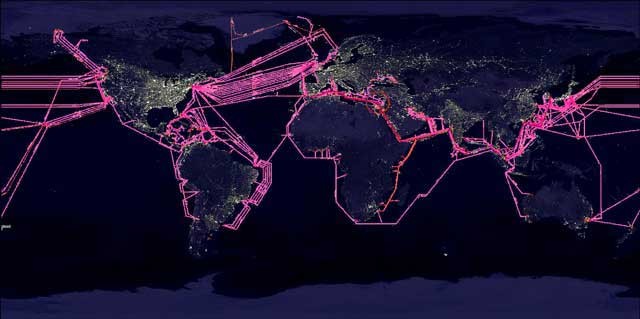
- Overview
Wireless technologies are crucial to the National Information Infrastructure (NII) by enabling anytime, anywhere connectivity through mobile phones, satellites, broadcasting, and data networks, shifting communication from place-to-place to person-to-person, but their integration with wireline systems presented challenges in standards, regulation, and infrastructure, prompting studies on policy options for seamless, nationwide digital information access.
The NII refers to the nationwide interconnection of communications networks, computers, databases, and electronics, encompassing public/private networks, the internet, and wireless/satellite systems, to make vast information available.
In essence, wireless technologies became a foundational element, expanding the NII's reach and functionality beyond fixed lines, but required significant policy and technical work to realize its full potential as a unified, mobile information system.
1. Key Contributions of Wireless Tech to the NII:
- Mobility & Ubiquity: Enabled mobile phones and data services, allowing users to access information from anywhere, transforming communication patterns.
- Digital Convergence: Integrated existing systems (radio, TV, cellular) and new digital services into a cohesive network.
- Diverse Services: Brought new forms of video, voice, and data to homes and businesses.
- Satellite Integration: Utilized satellites for broad coverage, complementing terrestrial networks.
2. Challenges & Policy Issues (Mid-1990s Context):
- Integration: Merging wireless and wireline networks was technically complex.
- Regulation: Federal, state, and local regulators needed to coordinate on standards, interconnection, and pricing.
- Standards: Developing common technical standards was essential for interoperability.
- Economic/Social Impact: Required understanding shifts in mobility, industry, and public access.
- The Modern National Information Infrastructure (NII)
The modern national information infrastructure (NII) is a comprehensive ecosystem encompassing a seamless web of physical, digital, and organizational components that underpin a nation's economy, security, and public services.
It moves beyond the traditional concept of the NII popular in the 1990s, integrating cutting-edge technologies like cloud computing, artificial intelligence (AI), and advanced cybersecurity frameworks to support a knowledge-based society.
Governments and industry are continuously working to modernize and secure this infrastructure, recognizing its foundational role in national well-being and security.
The U.S. Cybersecurity and Infrastructure Security Agency (CISA) provides resources and guidance for critical infrastructure protection, and the National Institute of Standards and Technology (NIST) researches relevant infrastructure standards and security.
1. Core Components:
A modern NII includes several integrated elements that work together to facilitate information flow and knowledge diffusion:
- Physical Infrastructure: This includes the fundamental hardware and networks such as high-speed broadband, fiber-optic cables, wireless technologies, servers, routers, switches, and data centers. These components store, process, and transmit data.
- Digital Infrastructure: This layer comprises software and digital platforms, including operating systems, databases, cloud services, and applications like content management systems and search engines. A key emerging aspect is Digital Public Infrastructure (DPI), which involves interoperable systems for digital identity verification, payments, and data exchange.
- Organizational Infrastructure: This element covers the policies, standards, governance frameworks, and human processes that manage information use and security. This includes regulatory compliance and risk management to ensure accountability and adherence to legal requirements.
2. Key Characteristics and Trends:
Modern NII is characterized by several key trends:
- Cloud Computing and Virtualization: A significant shift from on-premises data centers to scalable, flexible, and resilient cloud-based architectures is central to modern NII.
- Interoperability and Open Standards: The ability for diverse systems and components from different vendors to communicate and share data seamlessly is crucial for efficiency and security.
- AI Integration: AI and machine learning are increasingly integrated to automate operations, enhance data analytics, and improve security measures.
- Cybersecurity Focus: Protecting the NII is a top priority, with a move towards robust frameworks like Zero Trust architecture, which assumes no user or system is trustworthy by default, regardless of their location.
- Critical National Infrastructure (CNI) Protection: Specific essential systems (like power grids, transportation, and public health systems) that ensure a nation's stability are considered CNI and require specialized protection from cyber threats and natural disasters.
- Public and Private Sector Collaboration: The NII's success depends heavily on innovation and investment by the private sector, with the government's role being to create a supportive legal and regulatory environment and ensure public access.
3. Impact and Applications:
The modern NII has a profound impact across various sectors, enabling:
- E-Governance: Delivery of public services, government data sharing, and citizen participation in electronic form.
- Economic Growth: Support for new applications, e-commerce, and innovation in diverse fields like finance, healthcare, and education.
- Enhanced Connectivity: Improved access to information resources, facilitating distance education, collaborative research, and the sharing of vast cultural resources.
[More to come ...]
