
Spatial Intelligence AI
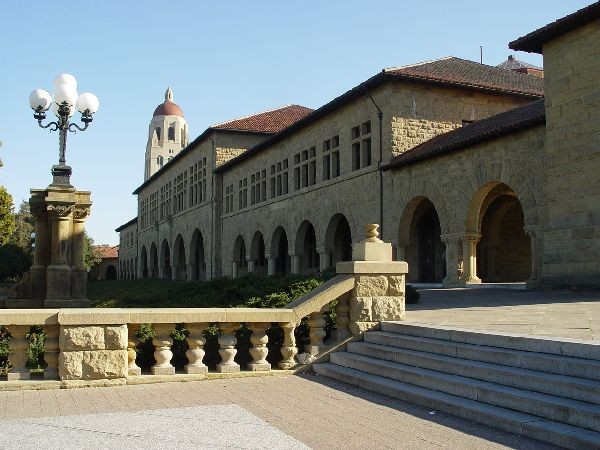
- (Stanford University - Alvin Wei-Cheng Wong)
- Overview
The future of AI is shifting from Large Language Models (LLMs) that process text to Spatial Intelligence, enabling AI to perceive, reason about, and interact with the 3D physical world.
Spearheaded by pioneers like Fei-Fei Li and her startup World Labs, this evolution uses "world models" to create, simulate, and manipulate 3D environments, moving beyond simple language to "worlds".
This technology will impact robotics, augmented reality, and 3D content creation.
1. Key Aspects of the Shift to Spatial Intelligence:
- Definition: Spatial intelligence is AI's ability to understand 3D scenes, including object permanence, physics, and kinematics. It is the foundation for "embodied AI" (robots) that can operate in real-world environments, not just in text or images.
- World Models: Instead of training on text from the internet, these models learn from visual, spatial, and physics-based data to predict how objects behave in 3D space. A prime example is World Labs' "Marble" platform, which can generate and edit 3D scenes from prompts.
2. Key Applications:
- Robotics: Allowing robots to navigate complex, changing environments and perform tasks like in-home or industrial care.
- Immersive Media: Empowering the creation of high-fidelity, interactive 3D virtual environments for gaming, education, and AR/VR.
- Design and Planning: Enhancing architectural design, construction, and urban planning by building 3D digital twins.
3. Beyond Words:
While current LLMs are "wordsmiths in the dark" (knowledgeable but ungrounded), spatial intelligence gives AI "eyes" to understand context and spatial relations, transforming AI from an advisory tool into an operational one.
4. Why it's the Next Frontier:
The consensus among researchers is that AI needs to be grounded in the physical reality humans inhabit to achieve greater utility and eventual artificial general intelligence (AGI).
- Spatial Intelligence AI
Spatial intelligence AI enables machines to understand, reason about, and interact with the 3D physical world, moving beyond 2D pixel analysis to grasp geometry, object relationships, and spatial context.
Spatial intelligence AI uses "world models" to bridge perception with action, allowing AI to navigate, manipulate objects, and simulate scenarios. This technology is key for robotics, autonomous vehicles, and AR/VR.
Key figures like Fei-Fei Li have identified this field as the next major frontier in AI, shifting from merely generating text to interacting with physical environments.
1. Core Aspects of Spatial Intelligence AI:
- 3D Understanding: Unlike LLMs (1D) or computer vision (2D), spatial AI models (3D/4D) understand depth, volume, and the physical constraints of the world.
- Perception-Action Loop: It connects "seeing" with "doing," enabling robots and autonomous systems to operate safely in dynamic, real-world environments.
- World Models: These AI systems build internal representations of physical spaces to predict future actions and simulate outcomes, a major focus for companies like World Labs.
- Data Sources: It relies on data from cameras, LiDAR, and sensors, translating these into rich, geometric, and semantic 3D information.
2. Applications and Impact:
- Robotics & Manufacturing: Enables robots to grasp objects and navigate complex, changing environments.
- Autonomous Vehicles: Helps cars and drones understand their surroundings, predict pedestrian paths, and plan routes.
- Digital Twins & Construction: Used for creating virtual replicas of spaces to monitor construction progress and optimize warehouse efficiency.
- AR/VR & Spatial Design: Powers immersive experiences and advanced 3D design tools, such as Manycore Tech's Kujiale and Coohom platforms.
- Spatial Intelligence (or Visuo-spatial Ability)
Spatial intelligence (or visuo-spatial ability) is the cognitive capacity to visualize, manipulate, and understand three-dimensional objects and spatial relationships, often described as "thinking in pictures".
Spatial intelligence enables people to interpret visual information, read maps, navigate, and predict how objects fit together.
This form of intelligence is essential for everyday tasks, from navigating a busy street to arranging furniture in a room.
1. Key Characteristics and Signs of High Spatial Intelligence:
Individuals with high spatial intelligence excel at creating detailed mental images. Key traits include:
- Strong Visualization: Easily imagining objects from different angles.
- Pattern Recognition: Easily identifying patterns, graphs, and charts.
- Spatial Manipulation: Mentally rotating and maneuvering objects.
- Navigation & Puzzles: Excelling at navigation, mazes, and jigsaw puzzles.
- Design/Artistic Interest: Enjoying drawing, designing, or building things.
2. Signs of Low Spatial Intelligence:
Conversely, individuals with lower spatial abilities may experience:
- Difficulty reading maps or visualizing directions.
- Challenges in estimating distances or packing objects into a confined space.
- Struggles with geometry or tasks requiring mental rotation of objects.
3. Benefits and Careers
Spatial intelligence is fundamental to STEM (Science, Technology, Engineering, Mathematics) and creative fields. Careers requiring this skill include:
- Architecture & Design: Architects, interior designers, landscape architects.
- Engineering & Technical: Mechanical engineering, civil engineering, robotics.
- Visual Arts: Photography, graphic design, animation, painting.
- Other: Surgeons, pilots, navigators, and cartographers.
4. Developing Spatial Intelligence:
Spatial skills are not entirely innate and can be improved through practice. Key training activities include:
- Block Play: Building with LEGOs or blocks.
- Mental Rotation: Imagining objects spinning in space.
- Video Games: Playing games that require spatial navigation (e.g., in 3D environments).
- Art Activities: Drawing, sketching, and sketching from different perspectives.
[More to come ...]
