Research Trends & Opportunities
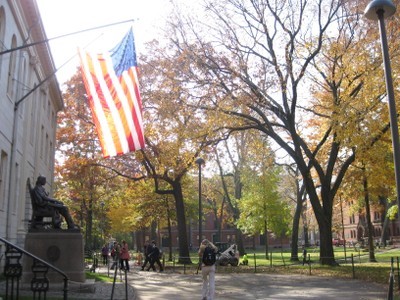
- (Harvard University - Joyce Yang)
Knowledge - The Heart and Mind of Economic Development
Recent EITC Focuses and Research Trends
"Bridging Disciplines: Our Culture Will Continue to Reshape Itself to Shape the Future."
- New Media and New Digital Economy
- Future Internet and Optical Quantum Communications
- 5G and Beyond Mobile Wireless Technology
- AI, Machine Learning, Deep Learning, and Neural Networks
- Data Science and Analytics
- Industrial Mathematics for the Modern Economy
- High-Performance and Quantum Computing
- New Energy and Energy Resources
- New Materials Technology and Applications
- Life Sciences, Biomedical and ICT Convergence
- Aerospace and Ocean Engineering, Earth and Atmospheric Sciences (AOEAS)
- New Agriculture and ICT Convergence
- Smart Manufacturing, Industry 4.0 and Beyond
- Architecture, Infrastructural Design, Civil Engineering, and Smart City Technology
- Advanced Software Engineering and Web Technology
Business and Management, Economics and Investments, Political Science and International Affairs
- [Yale University]
- EITA Industrial Technology and Venture Services
- Political Science and International Affairs Research
- Business and Management, Law, and FinTech
- Operations Research, Management Science, and Industrial Engineering
- Market Indexes and International Payment Systems
- Bridging Disciplines
"Bridging Disciplines: Our Culture Will Continue to Reshape Itself to Shape the Future" is a forward-looking mantra emphasizing that innovation and progress require breaking down silos between different fields (e.g., merging technology with arts, or science with social sciences) to create a flexible, proactive culture that actively designs its own future rather than merely reacting to it.
1. Bridging Disciplines (Interdisciplinary Collaboration):
- Breaking Boundaries: Moving beyond traditional, isolated departments or "silos" to connect diverse fields like health, arts, media, and community engagement.
- Solving Complex Problems: Addressing modern challenges requires multiple perspectives, as shown in academic settings where faculty and students blend different fields to foster innovation.
- Integrating Knowledge: It involves combining scientific, creative, and strategic approaches to create holistic solutions.
2. Our Culture Will Continue to Reshape Itself (Dynamic Evolution):
- Active Adaptation: Culture is not static; it is a "living, breathing element" that must evolve to survive.
- Proactive Change: Instead of waiting for change, leaders and organizations must consciously reshape their norms, values, and behaviors to stay relevant.
- Iterative Process: Similar to "updating a home," this process involves retaining the best parts of a culture while improving its value over time.
3. To Shape the Future (Intentional Impact):
- Defining the Future: By intentionally curating our culture, we gain the ability to direct our future rather than being victims of circumstance.
- Strategic Growth: A strong, intentionally designed culture is a competitive advantage that directly drives performance and innovation.
- Creating New Possibilities: By changing the narrative and using our "narrative power," we can define new, desired futures.
You are welcome to join the EITA Outreach (Readers) Forum at any time. Please click here to join the forum.
Note: Please click the overview of the available content on this web site for more details.
